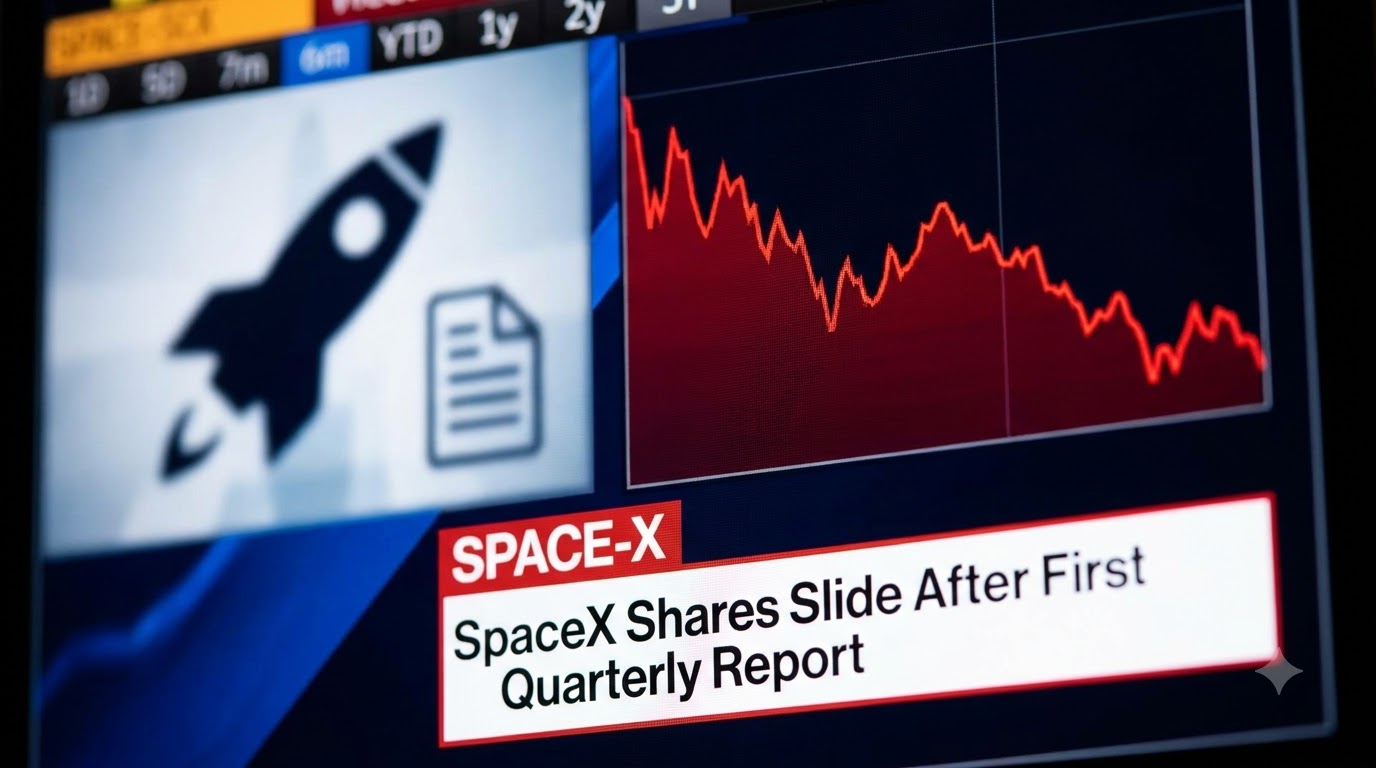
SpaceX shares experienced a sharp decline following the company’s first quarterly earnings report as a publicly listed entity. The stock closed at $108.10 on Wednesday, marking a 13.6 percent drop from the previous day’s close of $125.33. The move has raised questions among investors about the company’s financial strategy and long-term viability.
Capital Expenditures Spark Concern
The primary factor behind the share price decline appears to be the company’s significant increase in capital expenditures. SpaceX reported capital spending of $18.37 billion for the quarter, a six-fold increase compared to the same period last year. This figure far exceeded the $13.2 billion that analysts had anticipated.
A large portion of the investment—$15.8 billion—is allocated to artificial intelligence (AI) infrastructure. The company has outlined plans to expand its data center capacity from 1.4 gigawatts to 2 gigawatts by year-end. This includes specialized compute, storage, networking, and software systems necessary for building, training, and deploying AI models at scale.
Investors across the technology sector are scrutinizing whether these substantial investments in AI infrastructure will yield tangible returns. Josh Gilbert, lead analyst at trading platform eToro, noted that similar concerns have been raised about major technology firms during this earnings season. He stated, “Investors have started demanding a visible return on open-ended capital expenditures.”
SpaceX’s AI Infrastructure Strategy
SpaceX has emphasized that its computing capacity is not only used for its Grok models but is also actively sold. The company has secured $14.1 billion in cloud-services agreements, indicating a potential revenue stream from its AI infrastructure.
Despite the concerns surrounding capital expenditures, SpaceX reported some positive developments in its connectivity business. Revenue from Starlink satellite communications service increased by 66 percent year-over-year, with the number of subscribers doubling to 12 million. This generated $1.66 billion in operating income, a notable achievement for the company.
Lock-Up Expiry Adds Volatility Risk
SpaceX’s share price faces additional challenges as the first tranche of the post-IPO lock-up expires on Thursday. This will allow up to 911.5 million shares—roughly 20 percent of restricted holdings—to be sold. Melissa Otto, head of Visible Alpha research at S&P Global, warned that the stock is “likely to be volatile” once the lock-up lifts.
The company’s initial public offering (IPO) was priced at $135 per share and saw a rapid rise to $225 within days of its June 12 debut. This briefly made Elon Musk the world’s first trillionaire. However, the stock has since experienced a decline, reflecting the market’s evolving sentiment toward the company’s financial performance and strategic direction.
As SpaceX continues to navigate the challenges of being a publicly traded company, the market will be closely watching how the company balances its ambitious investments in AI infrastructure with its ability to generate sustainable returns for shareholders.